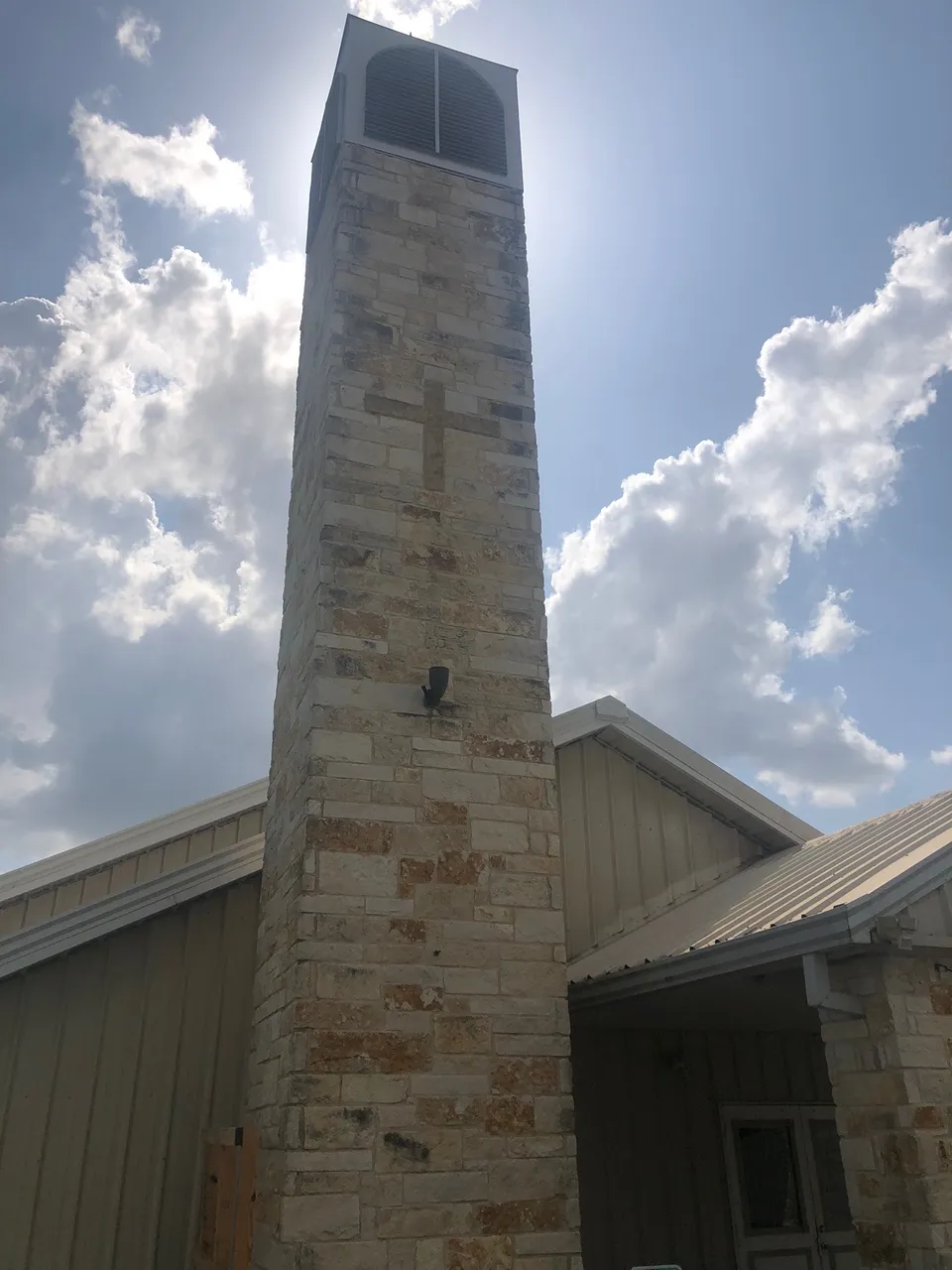
It is the most exposed brick on the house
A chimney sticks up above the roof with weather hitting it from every direction. The mortar joints, the crown on top, and the flashing where it meets the roof all take a beating, so they wear out long before the brick on your walls does.
Watch the crown, the flashing, and the joints
Most chimney trouble starts in three places: a cracked crown letting water down inside, failed flashing leaking where the chimney meets the roof, and open mortar joints soaking up rain. Catch those early and you usually avoid a full rebuild.
Small fixes now beat a rebuild later
Water is patient. A little crack that lets water in will freeze, expand, and pull the brick apart over a few winters. Repointing joints and sealing a crown is a far smaller job than rebuilding a stack that has already started to lean.
Look for clues below the roofline too
A chimney problem may first appear as a ceiling stain, damp smell, peeling paint, white mineral deposits, rust at a fireplace component, or debris in the firebox. Those signs do not identify the source by themselves, but they help connect an interior symptom to the crown, flashing, joints, or another part of the chimney assembly. Record when the symptom appears, especially after wind-driven rain.
A cap, crown, and flashing do different jobs
The cap helps keep rain and debris out of the flue opening. The crown or wash sheds water from the top of the masonry. Flashing seals the transition between the chimney and roof. Replacing one does not automatically correct a failure in another, so a useful inspection looks at the whole water path rather than selling the same repair for every leak.
Inspect from the ground and leave the roof work to safe access
Binoculars or zoomed photos can reveal open joints, a cracked crown, leaning courses, missing caps, and vegetation without climbing onto the roof. Also photograph the chimney from each accessible side and the interior symptom. Steep roofs and damaged masonry create real fall and collapse hazards; a close inspection should use the right access and safety setup, not an improvised ladder visit.
Need this looked at in person?
Photos and a quick description help the crew understand the project before an estimate visit.
Request estimate