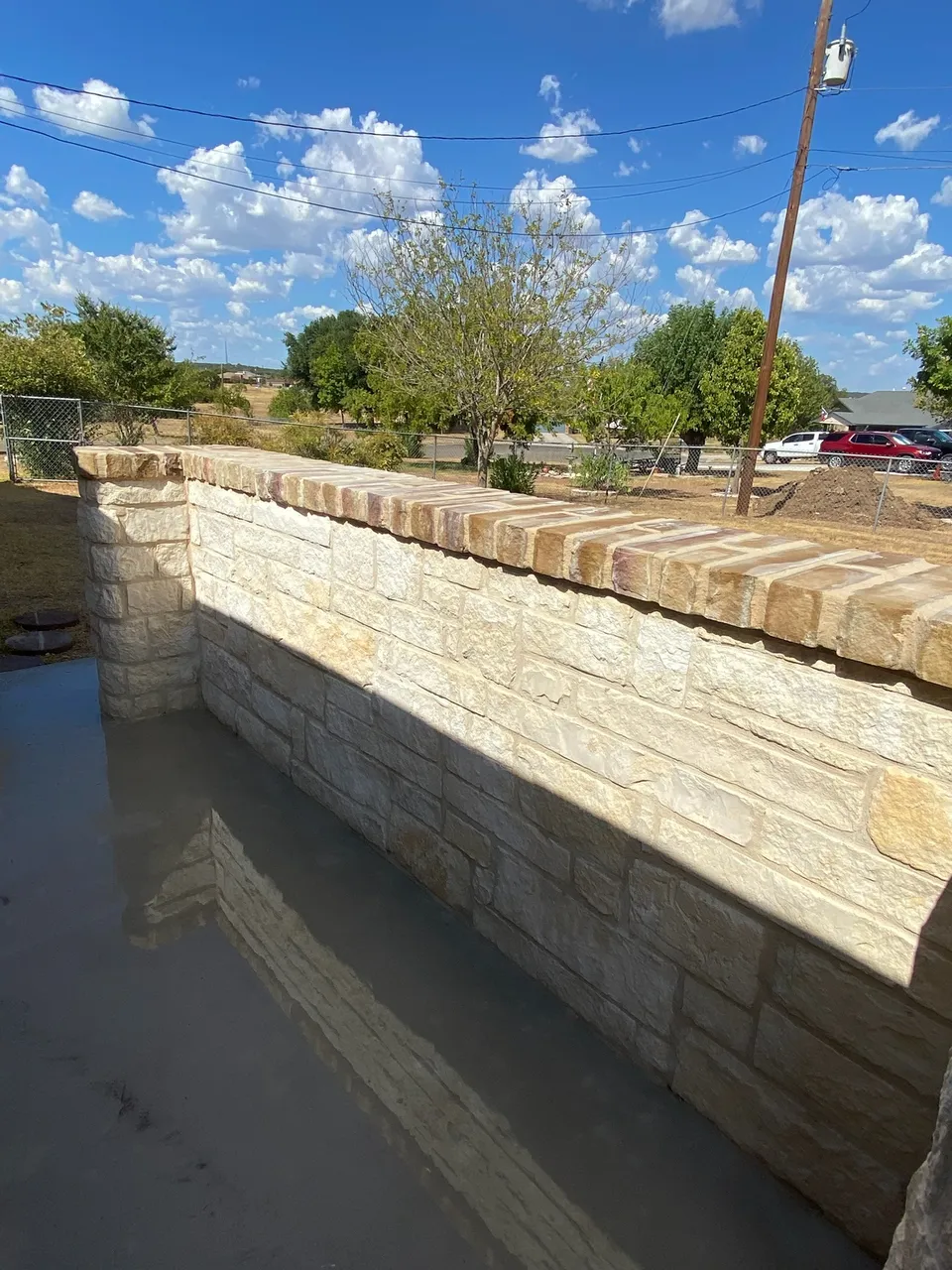
A retaining wall is a drainage system
The visible wall is only one part of the system. Base preparation, backfill, drain rock, pipe, weep paths, and slope all influence whether the wall stays straight through heavy rain and dry spells.
Water pressure adds up quickly
When water gets trapped behind a wall, pressure builds and can push the wall forward. Proper drainage gives water a path out before it starts moving the structure.
Match the wall to the site
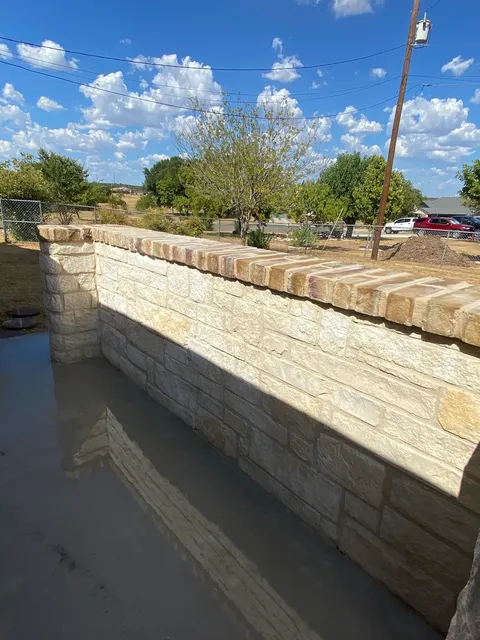
A short garden wall is not the same as a tall grade-retaining wall. Height, soil, slope, surcharge, and nearby structures should guide the material and reinforcement plan.
Give collected water a real outlet
Drain rock and pipe are useful only when the water has somewhere safe to discharge. The outlet should remain open, direct water away from the wall, and avoid creating a new problem at a foundation, sidewalk, or neighboring property. A buried outlet with no fall, a crushed pipe, or weep paths covered by soil can leave the wall holding the same pressure the drainage was meant to relieve.
Manage surface water before it reaches the wall
Roof downspouts, irrigation, driveway runoff, and the grade above the wall can send far more water toward it than normal rainfall alone. Extending a downspout or reshaping a shallow swale may be as important as the drain behind the masonry. The goal is two layers of protection: reduce the water arriving at the wall, then give the remaining water a dependable path out.
Know when the wall needs more than a rule of thumb
Wall height is not the only risk. A driveway, building, fence, steep slope, pool, or heavy equipment above the wall can add load, and erosion below it can undermine the base. When a wall retains meaningful grade or protects occupied space, the design may need site-specific engineering and local review. A responsible estimate should identify that boundary instead of treating every wall like a landscape border.
Need this looked at in person?
Photos and a quick description help the crew understand the project before an estimate visit.
Request estimate