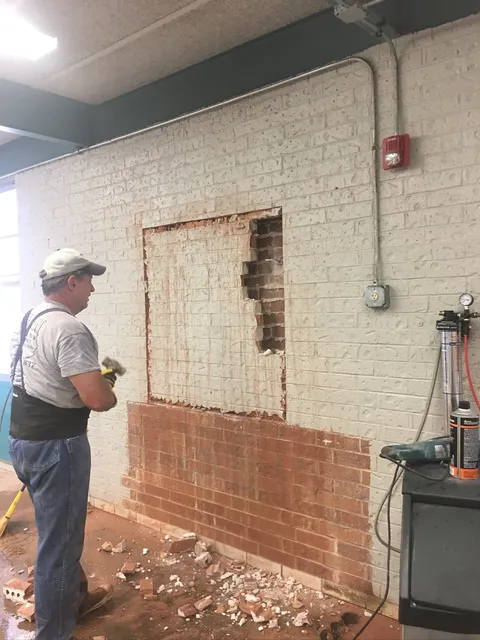
Brick gives pattern, color, and repeatability
Brick is a strong choice for walls, columns, borders, steps, and repairs where a clean pattern matters. It can often be matched to existing homes, but color and mortar selection should be handled carefully.
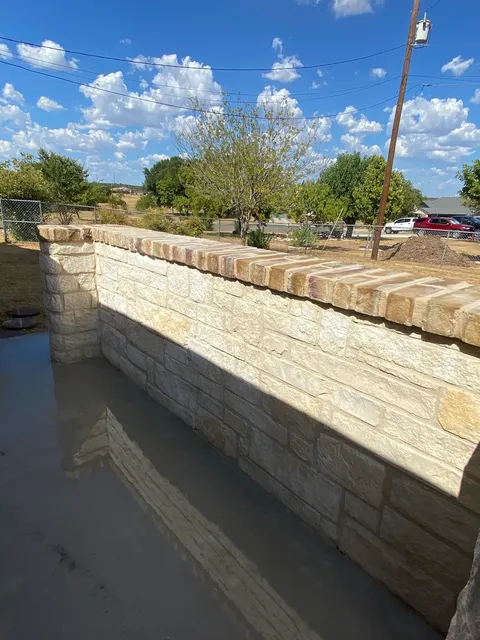
Stone gives texture and permanence
Stonework can make a fireplace, facade, patio, or landscape wall feel custom. It usually takes more field judgment because every stone shape, joint, and transition affects the final look.
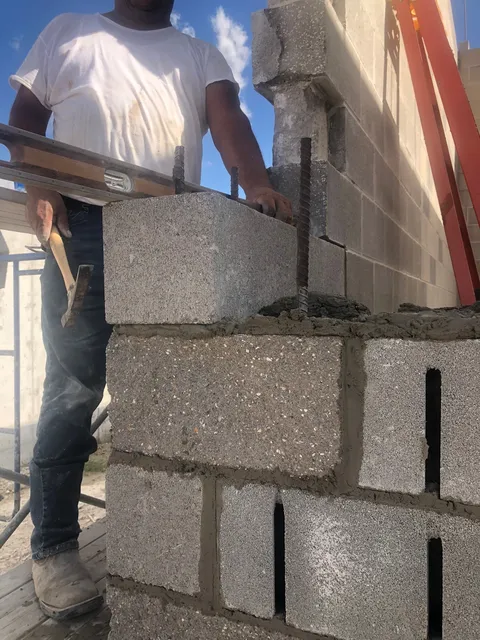
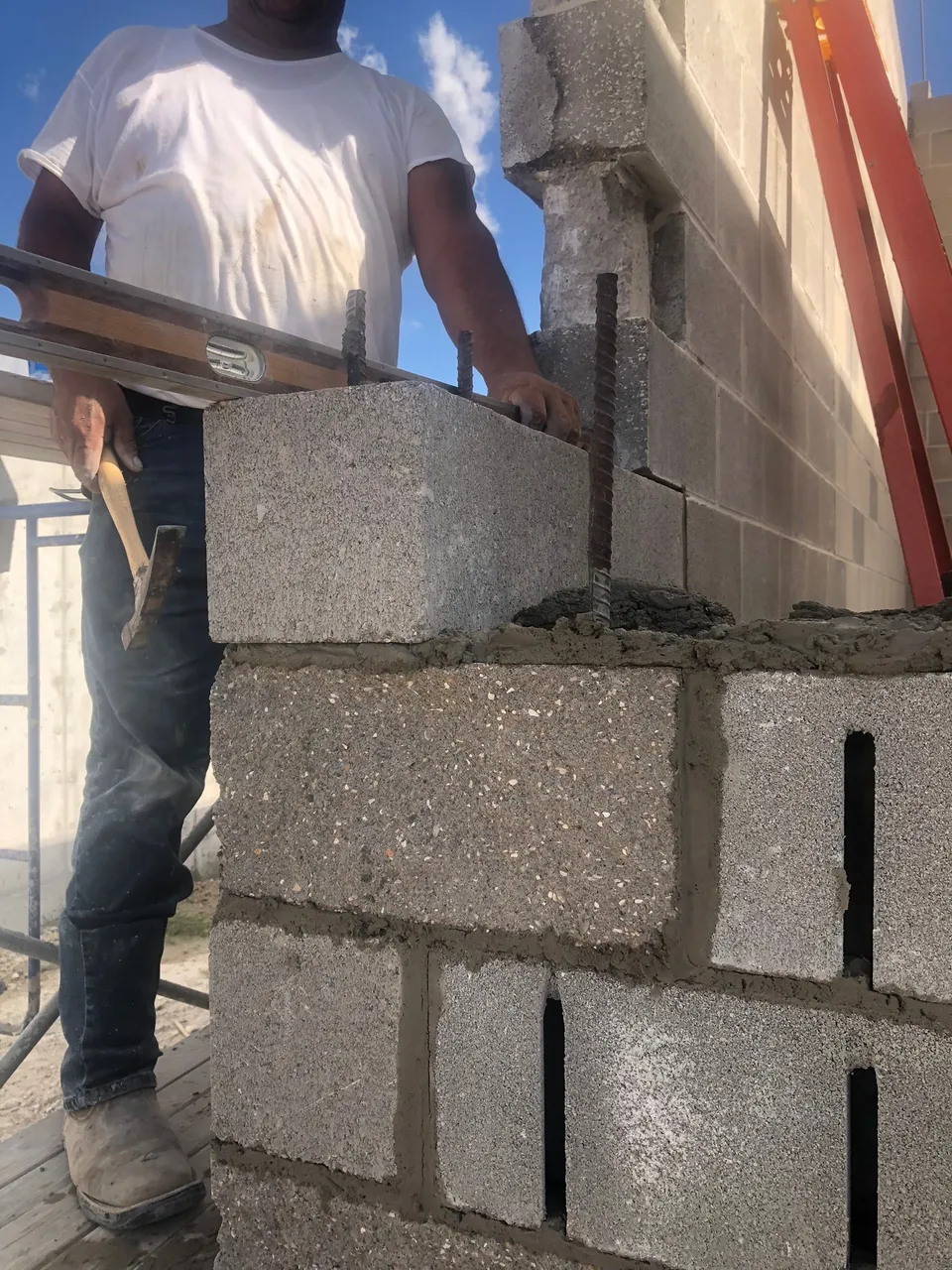
Concrete block is practical and structural
CMU is often chosen for site walls, foundations, and durable structures where strength, speed, and cost control matter. It can also be finished or faced for a cleaner appearance.
Separate the structure from the finished face
The material you see is not always the material doing the structural work. A wall may use reinforced block for its core and brick or stone veneer for its finished face. That combination can deliver strength and the look you want, but it needs the right footing, ties, drainage space, flashing, and transitions. Start with what the wall must do, then choose how it should look.
Compare the full installed scope
Material price is only one part of the decision. Site access, foundation work, wall height, reinforcement, cutting, scaffolding, mortar, caps, drainage, and cleanup all affect the installed cost. A less expensive unit can require more finish work, while a more expensive veneer may cover a smaller area. Ask for estimates that describe the same completed scope so the comparison is useful.
Bring the building and the site into the choice
Photos of the existing home or building, the proposed location, and nearby grades will quickly rule some options in or out. Also note whether you are matching existing masonry, supporting soil, enclosing a utility area, or creating a decorative feature. The best material is the one that fits the structure, exposure, maintenance expectations, and surrounding architecture—not simply the sample that looks best by itself.
Need this looked at in person?
Photos and a quick description help the crew understand the project before an estimate visit.
Request estimate