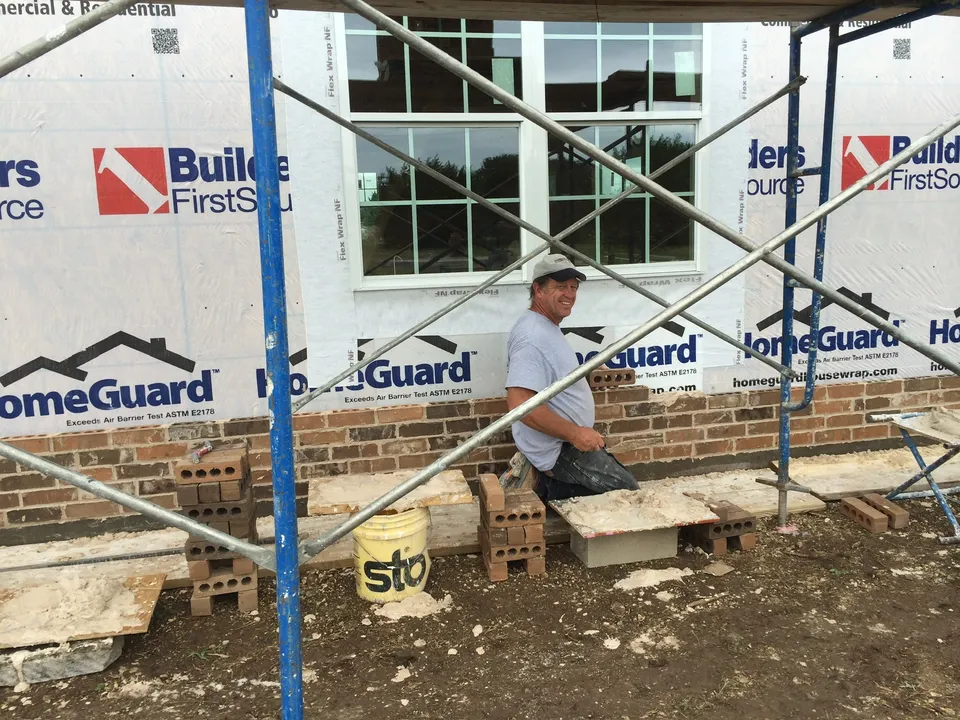
The mortar wears out before the brick
Mortar is meant to be the softer, sacrificial part of a wall — it gives a little so the brick does not have to. After a few decades the joints crumble, and that is normal. Tuckpointing cuts out the old mortar and packs in fresh so the wall is solid again.
The screwdriver test
Run a screwdriver along a joint. If the mortar is hard and stays put, you are fine. If it crumbles, rakes out easily, or you see gaps and a little sandy pile at the base of the wall, the joints are done and water is getting in.
Matching is the whole job
Good tuckpointing is invisible. The new mortar should match the old in color, sand, and joint shape. Mortar that is too hard or the wrong color can actually damage old brick and will stand out for years, so the matching matters as much as the work.
Spot pointing and full-wall pointing are different scopes
A few isolated open joints may be repaired locally, but widespread erosion usually calls for a broader section so the wall performs and weathers consistently. The estimate should identify the boundaries: individual cracks, one elevation, the area below a window, or the complete structure. That keeps a small repair from being described like a full repointing job—or the reverse.
The removal step protects the brick
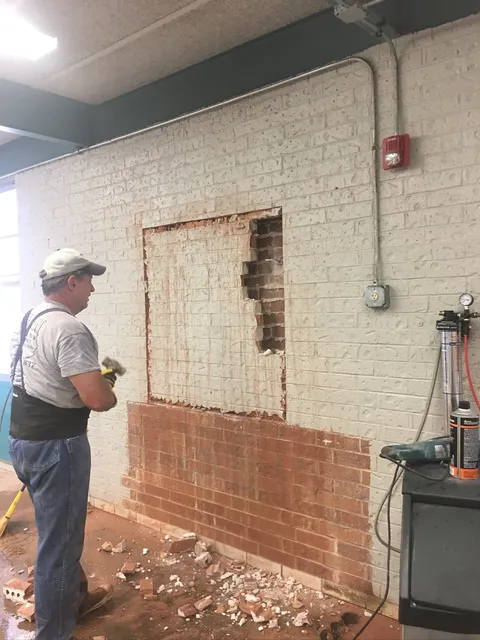
Worn mortar has to be removed to a sound depth before new mortar can bond. The method should clean the joint without widening it, rounding brick edges, or cutting into the units. Dust control and protection of windows, plants, roofs, and adjacent finishes matter too. Careful joint preparation takes time, but packing new mortar over loose material does not create a durable repair.
What a tuckpointing estimate should explain
Ask how much wall is included, how the old mortar will be removed, what mix and joint profile will be used, and whether a sample area will be approved first. The scope should also address access, protection, cleanup, and curing. Photos taken in even daylight help with the first conversation, but an on-site look is usually needed to judge joint depth and the condition of the brick.
Need this looked at in person?
Photos and a quick description help the crew understand the project before an estimate visit.
Request estimate