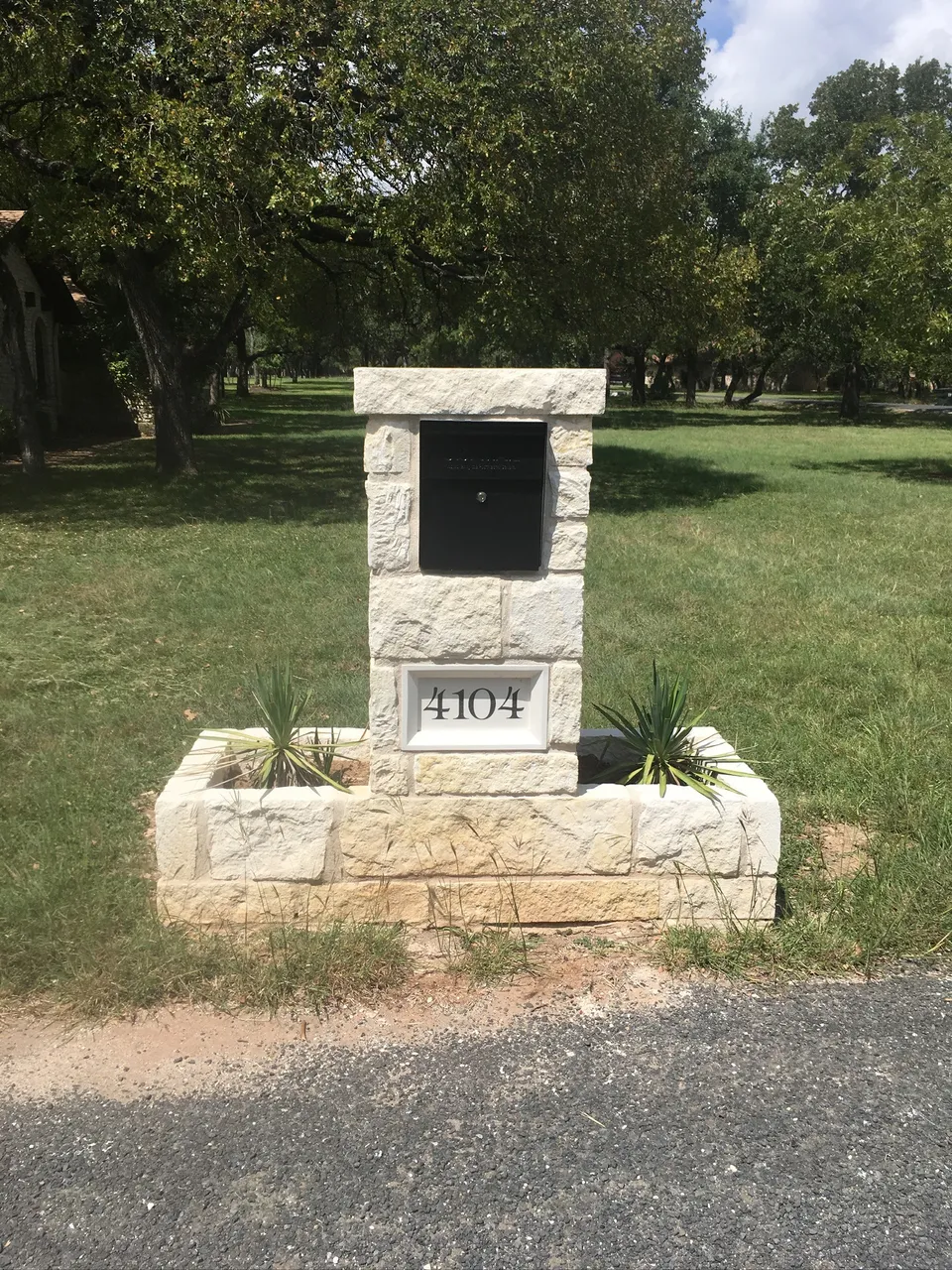
The ground moves, so the base has to be solid
Central Texas soil swells when it is wet and shrinks when it is dry. A brick mailbox sitting on dirt rides that movement and starts to lean or crack. A proper concrete footing below the surface keeps it level for good.
Freeze and weather take their toll
Water that gets into a poorly built mailbox freezes and works the brick loose, the same way it does on a chimney. Solid construction and good joints keep the weather out and the mailbox tight.
Match it to the house
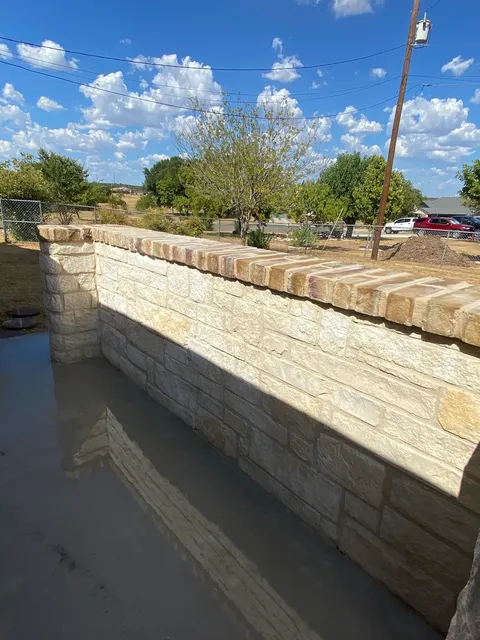
The detail that makes a brick mailbox look right is matching the brick or stone and the mortar to your home. Done well, it looks like it was always part of the property — not something added on later.
Choose the location before choosing the design
The mailbox needs to work with the road, driveway sight lines, drainage, mowing, delivery access, and any utility or easement constraints. Verify underground utilities before excavation and check current postal placement, neighborhood, and local requirements for the address. Moving the design a short distance on paper is easy; moving a reinforced masonry footing after it is poured is not.
Keep water out of the top and away from the base
A sloped cap, well-tooled joints, and a properly fitted mailbox insert help shed rain. At ground level, the surrounding grade should not hold water against the masonry or bury the finished joints. Sprinklers that repeatedly soak one face can accelerate staining and wear. Good drainage protects the footing and the visible masonry, especially through Central Texas wet-and-dry cycles.
Plan the details as one composition
Bring photos of the home and samples or close views of its brick, stone, and mortar. Decide on the insert size, address numbers, cap, newspaper slot, planter, light, and any electrical needs before work starts. Those elements affect the width and internal layout. A simple, proportioned design that repeats the house materials usually ages better than features added one at a time during construction.
Need this looked at in person?
Photos and a quick description help the crew understand the project before an estimate visit.
Request estimate